
Last updated November 15, 2026
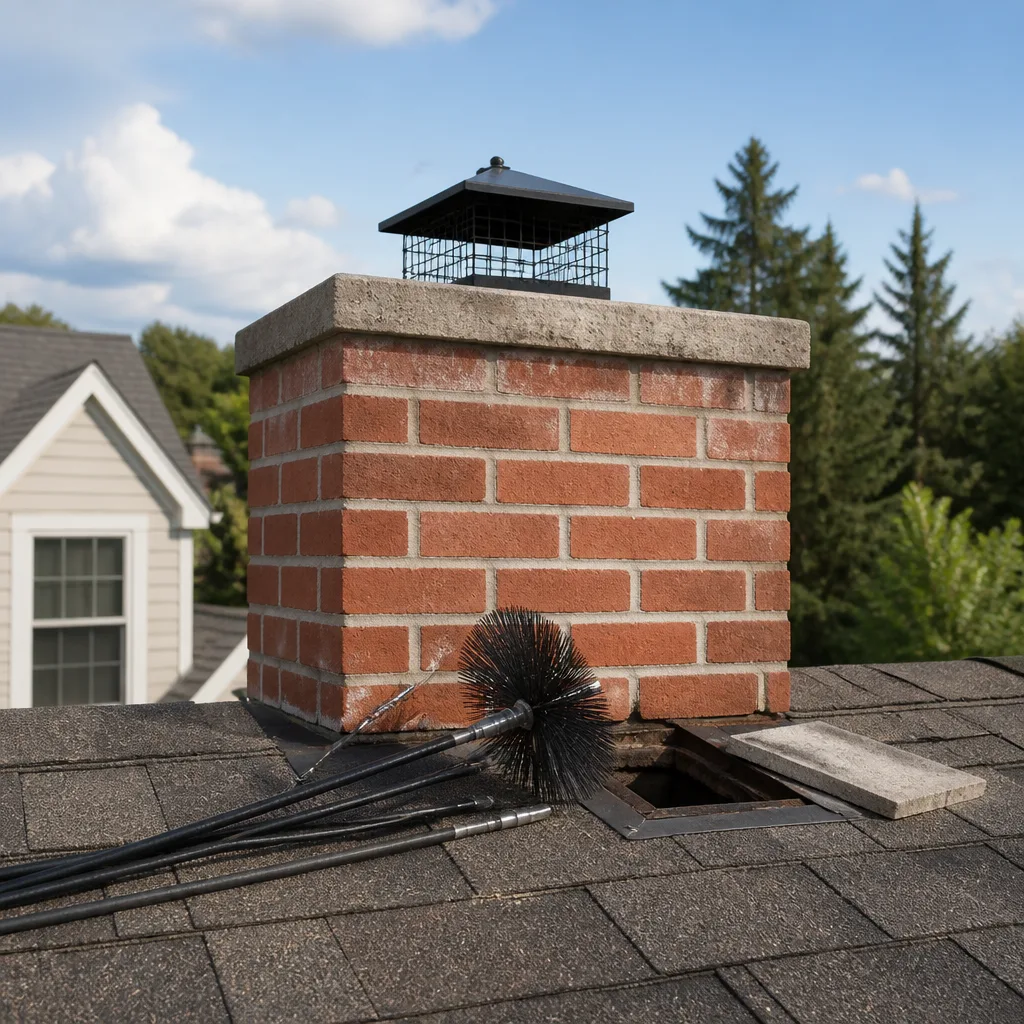 Sweep & inspection
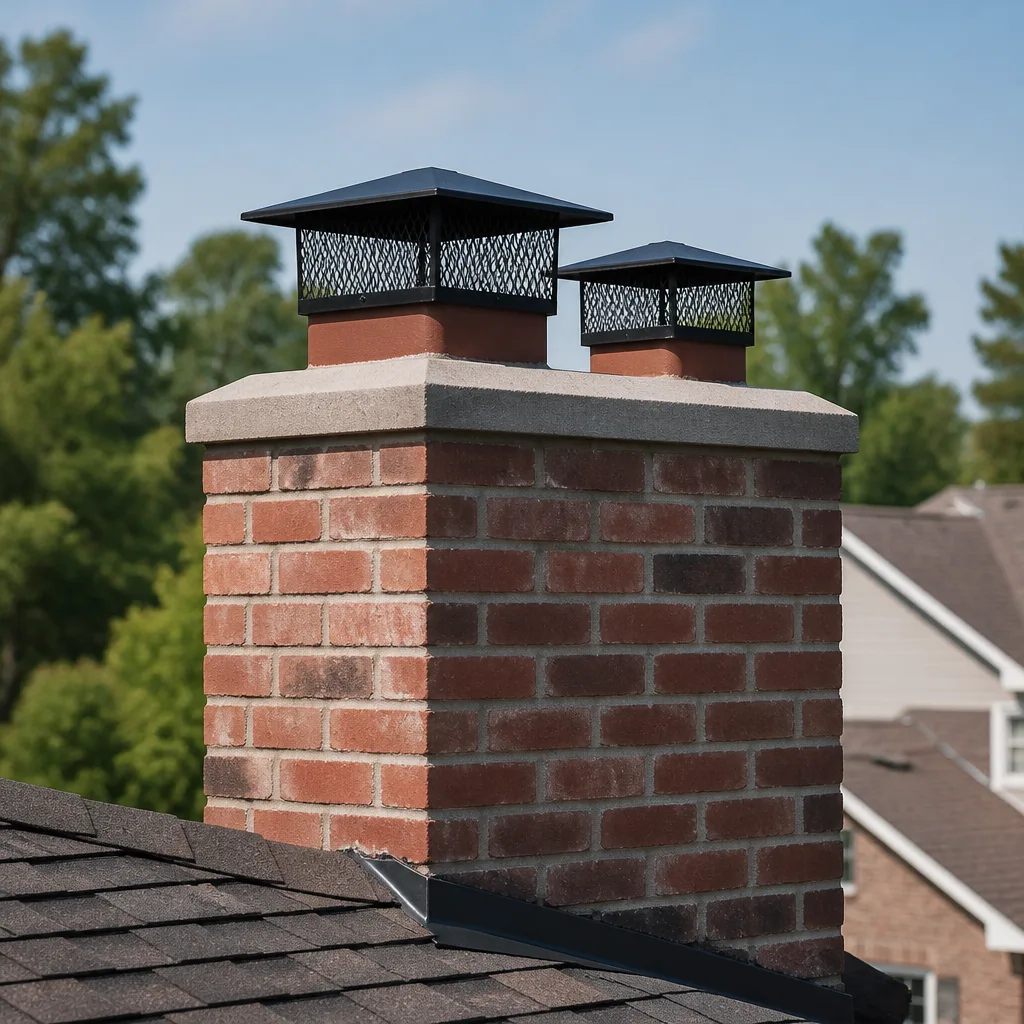 Caps & crowns
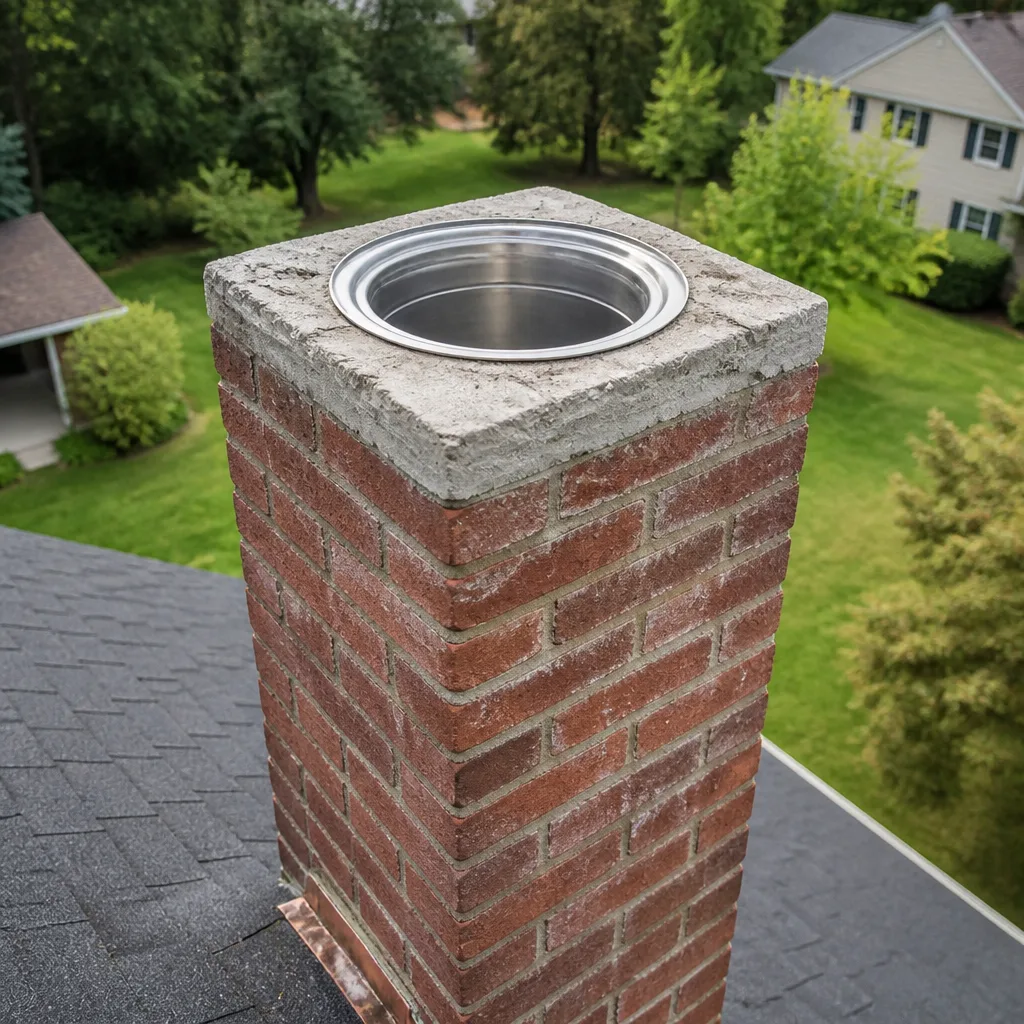 Flue relining
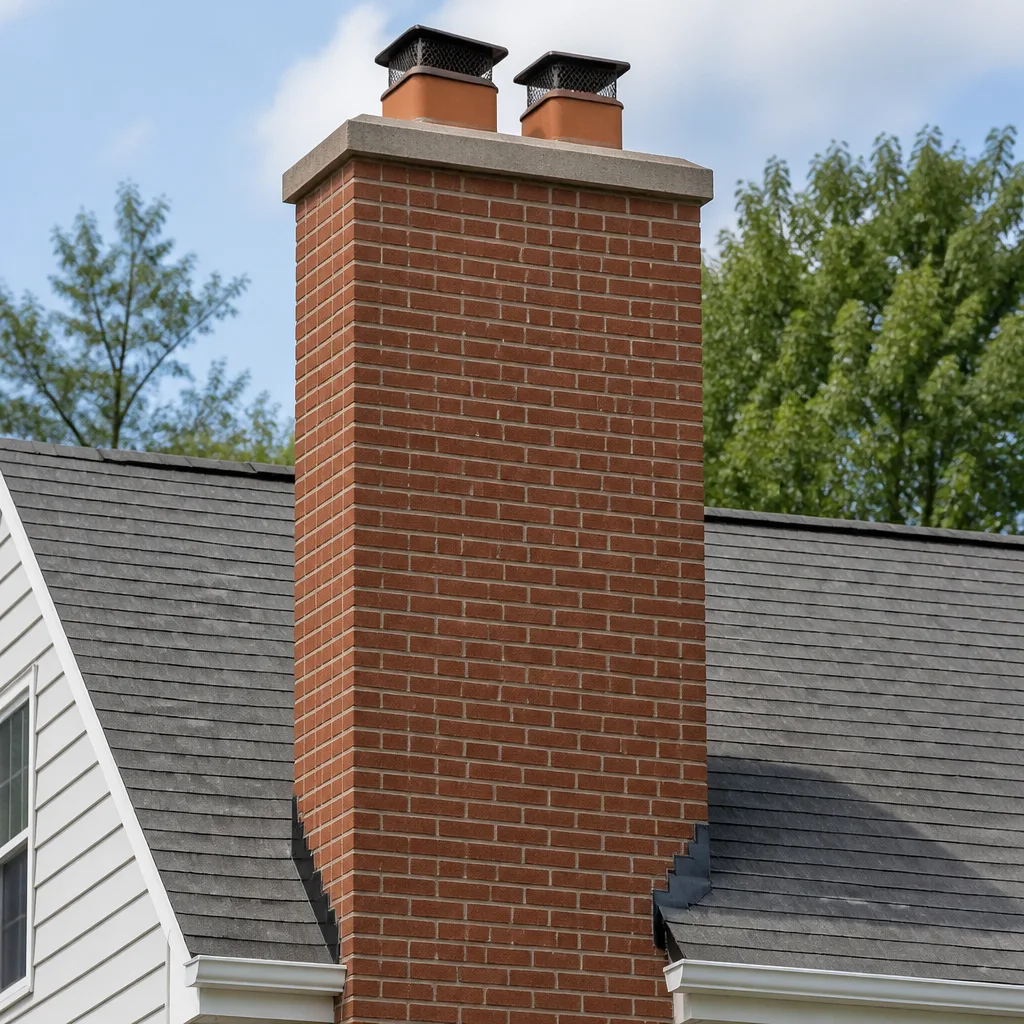 Masonry repair
 Gas fireplace service
Level 1 sweep and inspection to the NFPA 211 annual standard - flue, crown, cap, and flashing checked and photographed
Chimney sweep logs do not sweep chimneys. They loosen some creosote - which then falls where a brush and vacuum still have to collect it.
Chimney Sweep Troubleshooting in Spring Valley: Common Problems and How to Fix Them
Most homeowners in Spring Valley blame the chimney itself when something goes wrong. The fireplace smokes, the smell lingers, the draw feels weak, and the conclusion is always the same: the chimney is old and there’s nothing to be done about it. That conclusion is almost always wrong. A chimney is a system of parts working together, and when one part fails, the symptom it produces is specific and readable. A sharp tar smell points to creosote. A musty, earthy smell points to water. Smoke rolling back into the room when the wind picks up from the west points to pressure, not dirt. This guide maps the symptoms Spring Valley homeowners describe to the root causes behind them, so you can stop masking a problem with an open damper and start solving it.
Quick Answer
Most chimney problems in Spring Valley trace back to five causes: creosote buildup, water intrusion through a failing crown, negative pressure from tight single-story construction, flue sizing mismatches, and cold flue syndrome in desert temperature swings. Each cause produces a distinct symptom, and matching the symptom to the cause tells you whether you need a cleaning, a repair, or a change in how you operate the fireplace. Smoking that starts when the wind shifts is usually a pressure problem, not a dirty flue.
Styles & brands we work with
- Sweep & inspection
- Caps & crowns
- Flue relining
- Masonry repair
- Gas fireplace service
Table of Contents
- Why Does Smoke Roll Back Into the Room?
- What Does Your Chimney Smell Like, and What Does It Mean?
- What a Slow Draw Actually Tells You
- What You Can Safely See From the Firebox
- Why the Mortar Crown Fixes Three Symptoms at Once
- Creosote Stages and What They Require
- The Dryer Vent Problem Hiding in the Same House
- Common Mistakes to Avoid
Why Does Smoke Roll Back Into the Room When the Wind Picks Up?
Smoke rolling back into the room when the wind rises is a negative pressure problem, not a dirty flue. Spring Valley’s housing stock is dominated by single-story ranch homes built close together, often with the same roof pitch and the same window placement on every lot. That uniformity matters. When a west wind hits the side of a single-story ranch, it creates a high-pressure zone on the windward wall and a low-pressure zone on the leeward side. If the chimney sits anywhere in that leeward pocket, and the house is tight enough that interior air can’t easily escape, the chimney becomes the easiest path for air to enter. Air flows down the flue, and smoke with it.
We’ve seen this misdiagnosed as a dirty flue more times than any other chimney problem in Spring Valley. A homeowner notices smoke, calls for a sweep, the flue comes back clean, and the smoke returns on the next windy day. The sweep wasn’t wrong; the diagnosis was incomplete.
What actually causes negative pressure in a Spring Valley home:
- Tight construction. Modern windows and weatherstripping seal a house well enough that a bath fan or kitchen hood can depressurize the whole interior.
- Competing exhaust. A range hood running at the same time as a fire pulls air up and out, and the fireplace has to make it up somewhere.
- Chimney height. A flue that terminates too close to the roofline or a neighboring structure sits in turbulent air rather than clean airflow.
- Wind direction. A west wind on a leeward chimney is a textbook setup for rollback.
The fix depends on the cause. Sometimes it’s as simple as cracking a window on the windward side before lighting a fire. Sometimes it means adding chimney height or installing a different cap. And sometimes the flue itself is undersized for the firebox, which is a sizing question we cover further down. None of those fixes involve sweeping a clean flue, and that’s the point.
What Does Your Chimney Smell Like, and What Does It Mean?
The smell is a diagnostic tool, and it’s one most homeowners never use. Two different problems produce two very different odors, and confusing them means you’ll pay for the wrong fix. A sharp, acrid, tar-like smell is creosote. A musty, earthy, damp-basement smell is moisture. Those are not the same problem, and they don’t have the same solution.
Creosote odor: sharp and tar-like
Creosote is the residue left behind when wood smoke cools against the flue walls. It’s flammable, and it smells like tar or asphalt. When you notice that sharp smell on a warm day with no fire burning, it usually means creosote has built up to a level where it’s off-gassing. Spring Valley’s hot afternoons pull that smell down into the living space. This is a cleaning problem, and it’s also a safety problem, because creosote at the glazed stage ignites readily. A chimney sweep removes it and gives you a clean baseline. If you want the broader picture on scheduling, our guide to how often a chimney should be swept covers the timing question in detail.
Moisture odor: musty and earthy
Damp, earthy smells mean water is getting into the chimney structure. In Spring Valley, that’s almost always a crown or flashing problem rather than a flue problem. Water enters at the top, soaks into the masonry, and produces that basement smell every time the sun warms the exterior. Cleaning the flue won’t touch it. What you need is an inspection of the crown, the flashing, and the cap. Sweeping a wet chimney actually makes things worse, because it agitates damp soot that then sets harder on the flue walls. If the smell is musty, get the water source found first.
One more odor worth naming: a sulfur or rotten-egg smell has nothing to do with your firewood. It usually means a gas appliance or gas insert is involved and needs professional attention right away. Turn the appliance off and call.
What Does a Slow or Sluggish Draw Actually Indicate?
A chimney that draws weakly is telling you something specific, and the message is rarely “it needs a sweep.” A slow draw points to one of three causes: a flue that’s the wrong size for the firebox opening, a damaged smoke shelf, or cold flue syndrome. Each has a different signature.
- Flue sizing mismatch. The flue needs to be sized to the firebox opening. A firebox added or enlarged without matching the flue, or a flue that was always too large for the opening, will draw sluggishly no matter how clean it is. This is the one that most often gets missed, because a sweep sees a clean flue and calls the job done.
- Damaged smoke shelf. The smoke shelf is the ledge at the back of the firebox that turns smoke upward into the flue. When it’s cracked or missing mortar, smoke spills forward instead of turning. A damaged smoke shelf is visible from inside the firebox with a flashlight, but it’s easy to mistake for shadow.
- Cold flue syndrome. Spring Valley’s desert nights drop fast. A flue that’s cold at the start of a fire resists drawing until it warms up, and in the meantime, smoke has nowhere to go but into the room. This is why the first ten minutes of a fire often smoke worse than the next hour. It’s normal up to a point, but if it happens every single time, it’s worth checking the other two causes.
There’s a fourth possibility that comes up often enough in Spring Valley to mention. A flue that shares a chase with a furnace or water heater vent can pull combustion gases from the other appliance instead of exhausting smoke. That’s a serious situation, and it’s why we always look at what else vents into the same chase before recommending a fix.
What You Can Safely See From the Firebox
You don’t need to climb onto the roof to gather useful information. Several of the most important chimney problems are visible from inside the firebox with a flashlight, and what you see shapes what a technician should check first. We want to be clear about scope: look, don’t touch, and never reach up into the flue or over the damper. Anything that requires disassembly or a ladder is a job for a trained professional.
What to look for, and what each cue means:
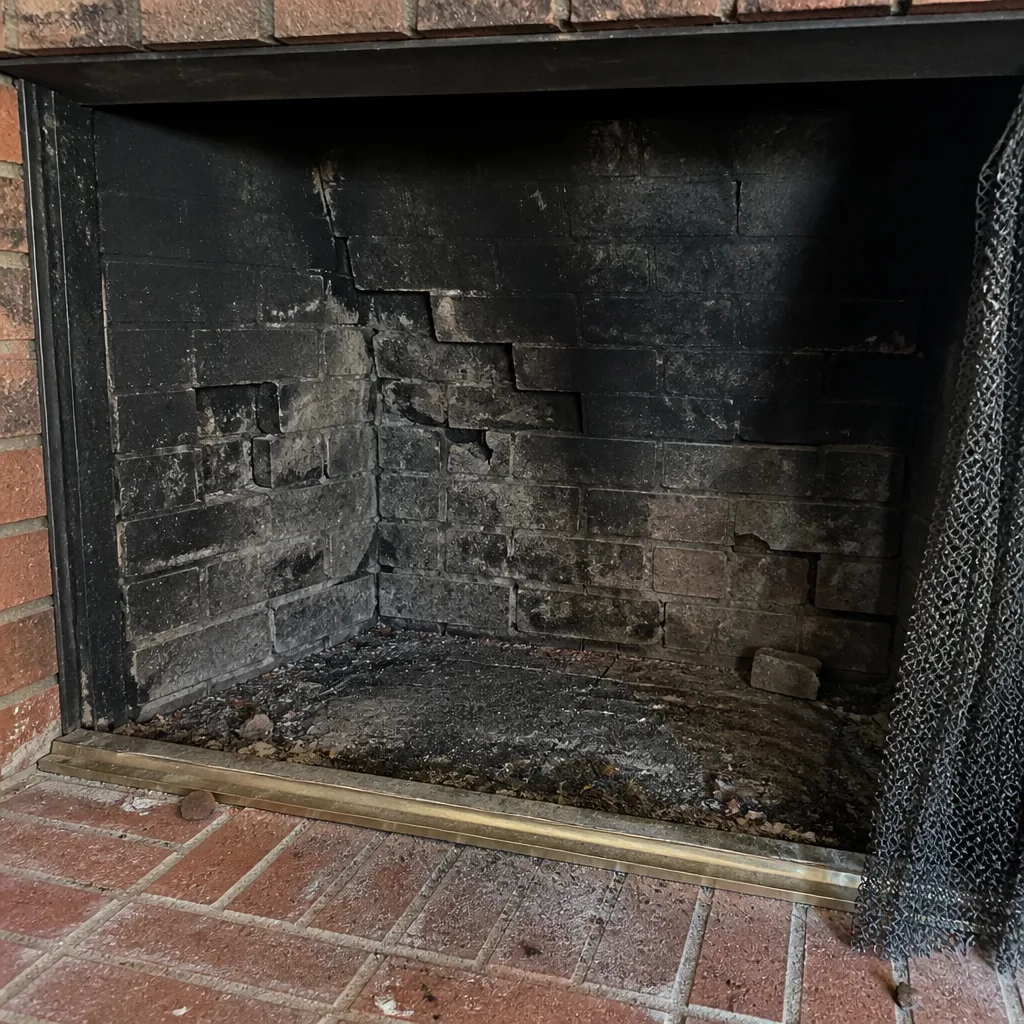
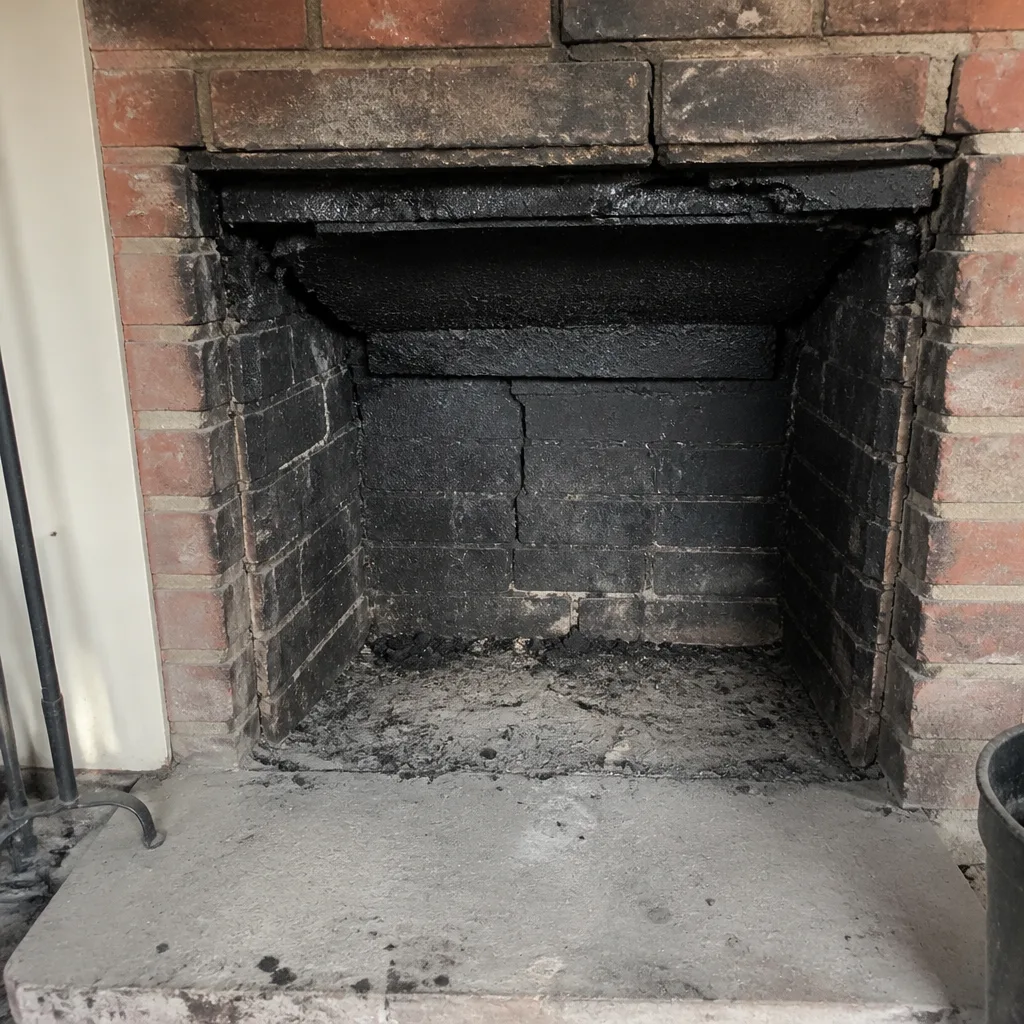
- Spalling firebrick. Firebrick that’s flaking, crumbling, or pitted is a sign of repeated thermal cycling or moisture. It means the firebox is losing its heat barrier, and that is a structural question, not a cleaning one.
- White efflorescence on the damper or firebox walls. That chalky white powder is mineral salt left behind when water evaporates. It’s a reliable indicator of water intrusion, usually from above.
- Rust streaks on metal components. Rust on the damper or the firebox metal means water is reaching places it shouldn’t. A damper that’s stiff or stuck is often a rust problem before it’s a mechanical one.
- Black staining above the firebox opening. This means smoke is spilling forward instead of going up. Combined with a slow draw, it points to a smoke shelf or sizing issue.
- Cracked or missing mortar joints. Visible gaps in the firebox brick are a structural concern and a reason to stop burning until they’ve been examined.
If you see any of these, the right move is an inspection with a camera, not a sweep. A camera inspection lets you see the flue from the inside without guessing, and a photo report shows you exactly what the technician saw, so you’re not taking anyone’s word for the condition of your chimney.
Why the Mortar Crown Fixes Three Symptoms at Once
The crown is the mortar cap at the top of the chimney that sheds water away from the flue. When it cracks, three separate symptoms appear, and homeowners usually try to fix each one individually without realizing they share a single cause. Repairing the crown resolves all three.
Symptom one is water intrusion. A cracked crown lets rain straight down into the chimney structure, which produces the musty smell covered above. Symptom two is spalling, both on the brick above the roofline and inside the firebox, because repeated wet-and-dry cycles break masonry apart. Symptom three is draft inconsistency, because a chimney that stays damp doesn’t warm up or draw the way a dry one does.
That’s why a crown repair is often the highest-value chimney fix available. It’s a top-down solution, and Spring Valley’s desert sun is hard on mortar. The same thermal cycling that warms a flue quickly on a cold morning also weakens mortar over the years, and crowns are the first thing to go. A proper crown repair uses the right mortar mix and a bond that holds through the temperature swings, which is why material selection matters. We stock Copperfield products for crown and masonry work because the components are specified for the job, not improvised on site.
The repointing work around a crown often goes hand in hand with a cap replacement. A missing or damaged cap lets water and animals into the flue, which compounds the crown problem. We source caps through Gelco and Famco, chosen to match the flue size and the local wind exposure rather than whatever’s on the shelf.
Creosote Stages and What They Require
Creosote is the single most common reason a chimney fire starts, and it exists in three stages, each needing a different level of intervention. Knowing the stage tells you what kind of visit you’re looking at.
- Stage one: soot and light flake. This is what a routine sweep removes. It’s soft, dusty, and comes off with standard brushing. A single visit with a camera inspection afterward confirms the flue is clear.
- Stage two: hard, crusty deposits. Flake that has bonded to the flue wall. A standard brush may not fully remove it, and the technician has to assess whether the flue can be cleaned without damage to the liner.
- Stage three: glazed creosote. This one is the serious stage. Glazed creosote is hard, glossy, and highly flammable, and brushing alone won’t remove it. Depending on the extent, the repair path may involve resurfacing the flue with HeatShield, which restores a deteriorated flue interior without a full tear-out, or relining with a DuraFlex flexible liner system when the existing flue can’t be safely restored.
We mention those specific systems because material selection is part of the diagnosis, not a sales decision made at the end. A flue that can be resurfaced should be resurfaced, and a flue that needs relining should be relined. The Whitman Chimney Cleaning team works with a defined roster of professional-grade suppliers, and the choice of system comes from what the camera shows. That’s also how we handle Spring Valley homes where the original clay tile flue has cracked or separated.
One safety note that matters more than any product recommendation: glazed creosote is a serious fire risk, and no homeowner should attempt to remove it or burn it off. A chimney fire can spread into the surrounding structure in a way that isn’t visible from the inside of the house. Call a trained professional for anything at stage two or beyond. This is not a job to handle yourself.
The Dryer Vent Problem Hiding in the Same House
Most homeowners think of chimney problems and dryer vent problems as completely separate concerns. They’re not. Both are venting systems carrying heat and combustible byproducts out of the house, and both fail for the same reasons: lint and creosote accumulate, airflow drops, and the heat has nowhere to go. The National Fire Protection Association identifies dryer lint as a leading contributor to thousands of residential fires each year, and the mechanism is the same category of hazard as a loaded flue.
Spring Valley homes often have long dryer vent runs, particularly where the laundry is set back from the exterior wall. A long run with a few elbows traps lint faster than a short, straight one, and it’s the kind of problem a homeowner can’t see. The result is a dryer that takes two cycles to dry a load, which most people blame on the appliance. Our dryer vent cleaning service exists alongside the chimney work because scheduling both in a single visit mean one appointment, two of the most common household fire hazards addressed.
What to check for, without disassembling anything:
- Drying time creeping up. A load that used to finish in 45 minutes now taking 70 is the earliest signal.
- Heat at the dryer door. A dryer that’s hot to the touch on the outside is struggling to vent.
- Lint behind the dryer. Lint escaping into the room instead of going up the vent means the vent is partly blocked.
- The exterior damper. If the flap on the outside wall doesn’t open fully when the dryer runs, airflow is restricted.
How a Spring Valley Chimney Inspection Actually Works
An inspection is not the same thing as a sweep, and the distinction matters when you’re trying to troubleshoot a specific problem. A sweep is maintenance. An inspection is diagnosis. When you call about smoking, odor, or a weak draw, you’re booking a diagnosis.
What a proper inspection involves:
- Firebox and damper check. Visible masonry, the smoke shelf, the damper operation, and any staining or efflorescence are examined and noted.
- Flue camera inspection. A camera goes up the flue to look for cracks, gaps, creosote staging, and the condition of the liner from top to bottom. You see the images.
- Roofline inspection. The crown, cap, and flashing are checked from the roof.
- Vent chase check. Anything else sharing the chase is evaluated for backdraft potential.
- Written report with photos. You get the findings in writing, with the images attached, so you can see what was found and decide what to do about it.
The reason we put so much weight on the camera and the photo report is simple. Homeowners get told they need thousands of dollars of liner or masonry work and have no way to verify it. That’s a fair hesitation. Nothing should be recommended without camera evidence you can look at yourself, and we say plainly when work can wait. A flue in good condition gets a sweep and a date to check again. A flue with a real defect gets a repair recommendation and a straight answer about what happens if it’s deferred.
Common Mistakes to Avoid
- Assuming a clean flue means the chimney is fine. A sweep cleans the flue; it doesn’t test the crown, the cap, or the smoke shelf. Smoke rolling back into a clean flue is a pressure or sizing problem, and sweeping it again won’t fix it.
- Treating musty odor as a creosote issue. That earthy smell is water, and the fix is at the top of the chimney. Cleaning a damp flue agitates wet soot that sets harder on the walls.
- Running a range hood and a fire at the same time in a tight ranch home. A kitchen hood can depressurize the interior enough to pull smoke down the flue. Crack a window on the windward side and the problem usually disappears.
- Burning unseasoned wood to save on cost. Green wood produces far more creosote than dry, seasoned wood, and in Spring Valley’s hot summers, moisture in the wood translates into faster buildup.
- Ignoring white efflorescence on the damper. That chalky powder is a water-intrusion indicator. Left alone, it progresses into spalling brick and a much bigger repair.
- Deferring a crown repair to save the cost now. A cracked crown is a top-down entry point for water. Repointing it stops water damage, spalling, and draft inconsistency at once, and waiting almost always costs more.
- Assuming the dryer vent is fine because the dryer still runs. Lint buildup reduces airflow gradually. By the time a dryer stops working, the vent has been restricted for a long time.
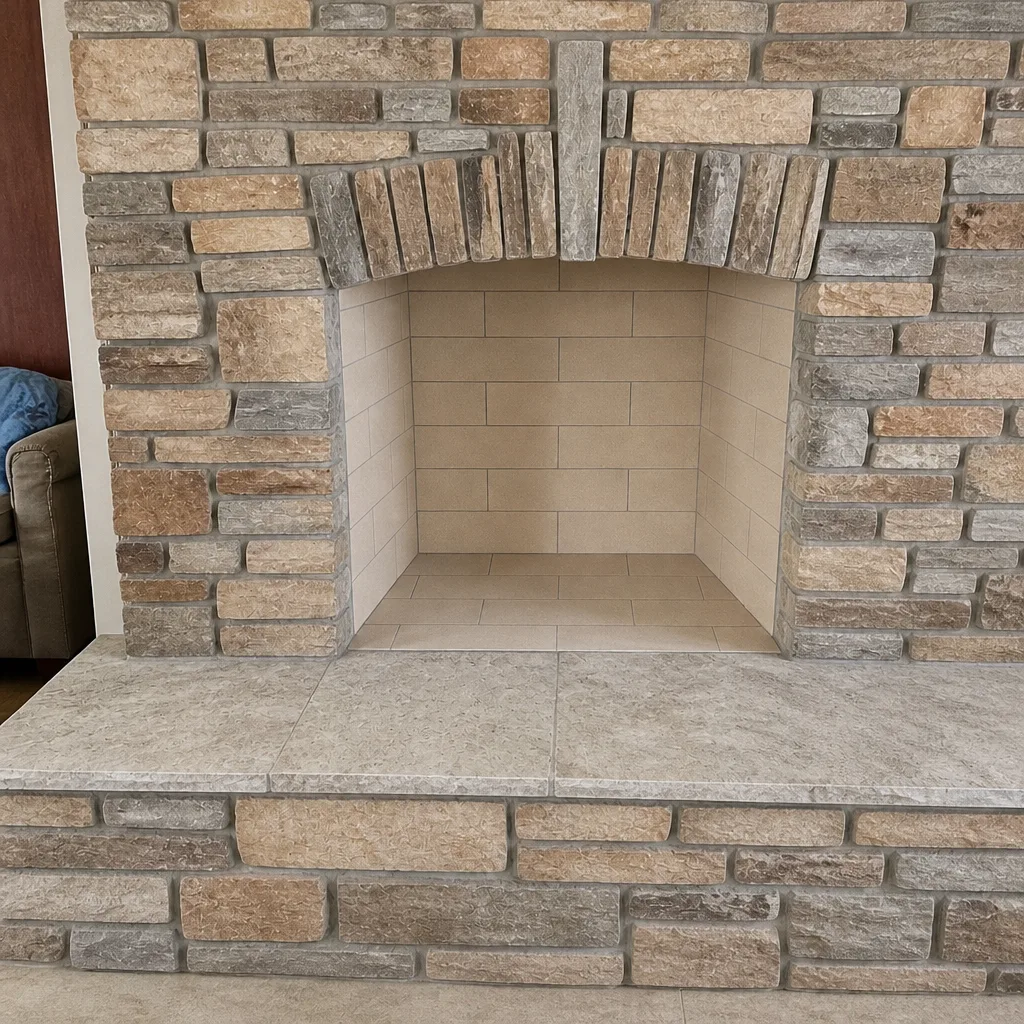
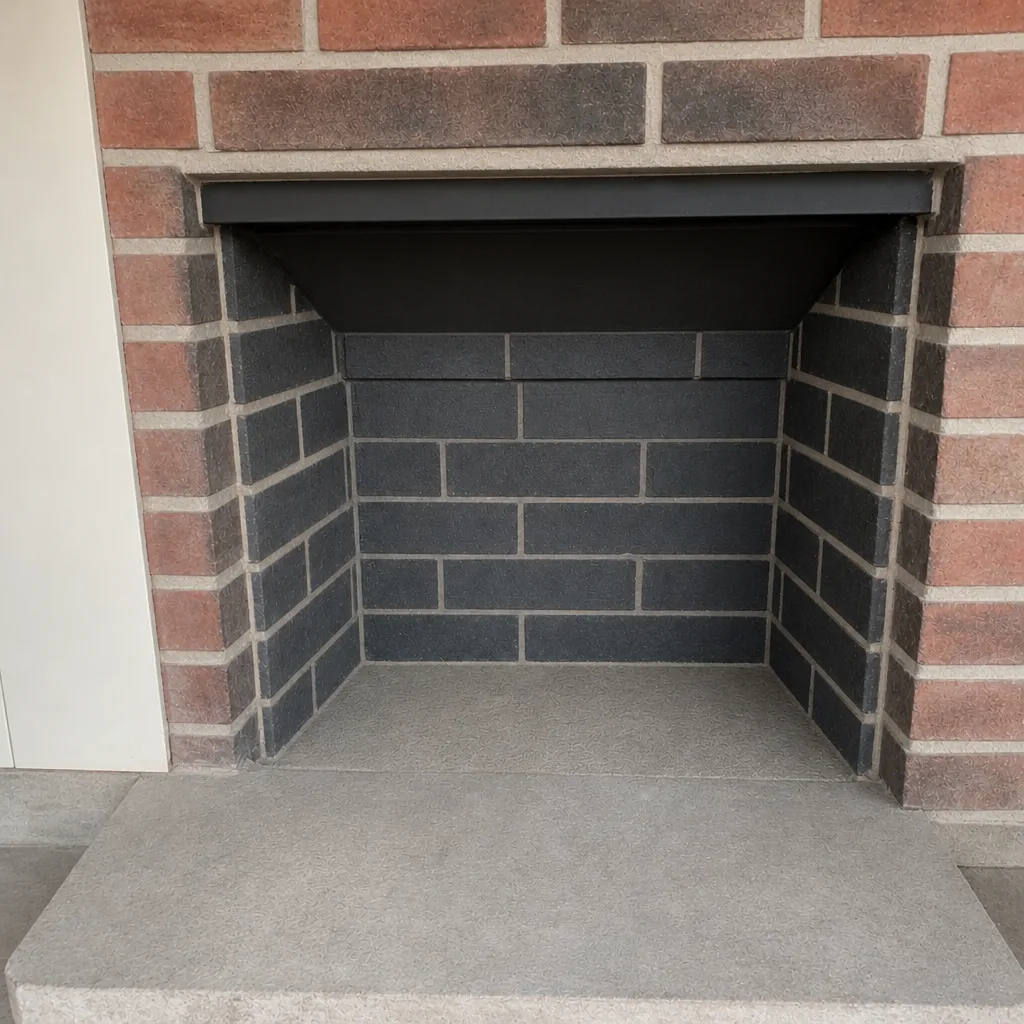
See the difference
 Before
 After
 Before
 After
 Before
 After
When to Call a Professional
Some chimney problems are safe to troubleshoot from the firebox with a flashlight. Others are not, and knowing which is which protects your home. Call a professional for any of these: glazed, glossy creosote visible up the flue; a firebox with cracked or spalling firebrick; smoke rolling back every time the fire is lit; a gas insert with a sulfur smell; a dryer that heats up but doesn’t dry; visible water damage or efflorescence at the damper; or a fireplace that hasn’t been inspected in the last year of use. Beyond the firebox, the roofline and the flue interior require trained eyes and camera equipment, and a chimney fire risk is not a risk to work around. Whitman Chimney Cleaning offers free estimates in Spring Valley. Call (888) 344-4211. We answer 24/7. Fast dispatch from 7am to 7pm, Sunday through Friday. Every visit includes a camera inspection and a photo report, so you can see what we see before anyone recommends work.
Frequently Asked Questions
It’s almost always negative pressure, not a dirty flue. A west wind hitting a tight single-story ranch home creates a low-pressure zone that pulls air (and smoke) down the chimney. A range hood or bath fan running at the same time can make it worse. A camera inspection confirms whether there’s a real flue defect or whether the fix is a pressure and sizing change. Call (888) 344-4211 for a free estimate.
Yes. A musty, earthy smell is the signature of moisture in the chimney structure, and it usually points to a cracked crown or flashing at the top rather than a creosote problem. Cleaning the flue won’t resolve it and can make it worse. An inspection of the crown and cap is the right first step. Call (888) 344-4211 for a free estimate.
A slow draw is a sizing, smoke shelf, or cold flue issue, not a dirt problem. The flue needs to match the firebox opening. A damaged smoke shelf spills smoke forward instead of turning it up. Cold flue syndrome in desert nights makes the first minutes of a fire smoky. A camera inspection tells you which one you have. Call (888) 344-4211 for a free estimate.
Yes, and it’s useful. With a flashlight, check for spalling firebrick, white efflorescence on the damper, rust streaks, black staining above the opening, and cracked mortar. Look only. Never reach up into the flue or over the damper, and never climb onto the roof. Bring what you see to an inspection. Call (888) 344-4211 for a free estimate.
The NFPA identifies dryer lint as a factor in thousands of residential fires each year, and a dryer can seem fine right up until airflow drops badly. If loads take longer or the dryer door feels hot, the vent is restricted. A long vent run in a Spring Valley home traps lint faster than a short one. Call (888) 344-4211 for a free estimate.
Yes. A cracked crown lets water in, which produces a musty odor, spalls the masonry, and leaves the chimney damp enough to draw poorly. Repointing the crown fixes water intrusion, spalling, and draft inconsistency in one repair. We stock Copperfield masonry products for the work. Call (888) 344-4211 for a free estimate.
The Bottom Line
Chimney problems almost always announce themselves with a symptom you can name. Sharp, tar-like smell means creosote. Musty, earthy smell means water. Smoke on a windy day means negative pressure. A weak draw means sizing, smoke shelf, or cold flue. Chalky white powder at the damper means water intrusion from above and a crown that needs attention. None of these are “the chimney just being old,” and each one has a fix. The trick is to stop masking the problem by leaving the damper open and start diagnosing it from the symptom. Where the fix is beyond the firebox, a camera inspection with a photo report is how you see the truth before you spend a dollar. And when one visit can address both the chimney and the dryer vent, you get two household fire hazards handled together.
Whitman Chimney Cleaning handles sweep, repair, and dryer vent cleaning together, with professional-grade materials from DuraFlex, HeatShield, Gelco, Olympia Chimney, Famco, and Copperfield matched to each specific job. Our technicians have up to 14 years of experience. Call (888) 344-4211 for a free estimate and a written price set by that estimate.
Written by the team at Whitman Chimney Cleaning.